
Your knees carry you through decades of life, up staircases, across hiking trails, and through long workdays. So when that deep, grinding ache sets in, and your doctor starts talking about thinning cartilage, it feels like the ground shifting under you. For millions of people living with knee pain from osteoarthritis or injury, the question is no longer just “how do I manage this?”, it’s “can my knee actually heal?”
That question is exactly why stem cell therapy for knees has become one of the most researched and discussed topics in regenerative medicine. And the honest answer? It’s complicated, but the science is moving fast, and the results so far are genuinely encouraging.
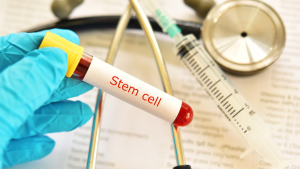
Let’s Talk About Why Cartilage Is Such a Problem
Cartilage is unlike most tissues in your body. It has no blood supply of its own, which means it can’t tap into the body’s usual repair systems when it wears down. Once articular cartilage, the smooth, shock-absorbing tissue that lines the ends of your knee bones, is damaged, the body struggles to replenish it on its own.
This is why osteoarthritis tends to be progressive. What starts as mild stiffness in your 40s can become bone-on-bone contact in your 60s. Traditional treatments like cortisone injections, hyaluronic acid, or physical therapy help manage pain, but none of them actually rebuild what’s been lost. That gap in treatment is precisely what regenerative approaches are trying to fill.
What Best Stem Cell therapy for Knees Actually Involves
When people hear “stem cell therapy for knees,” they often picture something futuristic and experimental. In reality, the most common approach used in orthopaedic regenerative clinics today is far more grounded, and it uses your own biology.
- The two main sources for stem cell therapy for knees are bone marrow concentrate (BMAC) and adipose-derived (fat-derived) stem cells. Both involve drawing cells from the patient’s own body, typically from the hip (for bone marrow) or abdominal fat tissue, processing them to concentrate the regenerative cells, and then injecting them directly into the knee joint.
- These cells are mesenchymal stem cells (MSCs), a type of adult stem cell that can potentially differentiate into cartilage, bone, and connective tissue. But here’s what the latest research suggests may matter even more: MSCs release signalling molecules that reduce inflammation, calm immune overactivity, and stimulate the surrounding tissue to repair itself.
- The cells may be behaving less like replacement parts and more like biological coaches, which command your knee’s own cells to start working again.
What Does the Research Actually Show?
This is where it gets interesting, and where it’s important to be loyal about where the science stands.
- Pain Reduction and Function Improvement
Multiple clinical studies over the past decade have shown consistent improvements in pain scores and physical function in stem cell therapy for knees osteoarthritis patients who received MSC injections.
- In the year 2019, an article published in the American Journal of Sports Medicine did a systematic analysis on data from various trials and found that bone marrow and adipose stem cell therapy for knees lead to significant pain reduction, with some effects lasting even two years.
- It should be noted that this improvement is often more significant than with either hyaluronic acid or PRP treatment alone.
- Cartilage Regeneration: The Harder Question
Growing actual new cartilage is a tougher bar to clear. Some studies suggest that MRI has shown measurable increases in cartilage thickness following MSC treatment, but the outcomes change depending on the severity of damage, patient age, the stem cell therapy for knees source used, and the preparation method.
- Research from Orth et al. (2021) noted that people having osteoarthritis at an early to moderate stage have greater benefits of a structural nature compared to those having advanced joint degeneration.
- This is consistent with the observations made by most regenerative doctors. The cartilage regeneration process produces fibrocartilage instead of hyaline cartilage.
- Delaying or Avoiding Surgery
One of the more compelling angles in recent research includes whether stem cell therapy for knees can delay or eliminate the need for knee replacement surgery.
- Several longitudinal studies tracking patients over 3–5 years have found that a significant portion of patients who received MSC injections either postponed surgery or avoided it altogether.
- This doesn’t mean it works for everyone, but for patients in the “not quite ready for replacement but not managing well either” zone, it represents a meaningful window of relief and function.
Who Is a Good Candidate for This Treatment?
Not everyone with knee pain will benefit equally from stem cell therapy. Based on current evidence and clinical patterns, the best candidates tend to share a few characteristics:
- They have mild to moderate osteoarthritis (Grade 1–3 on the Kellgren-Lawrence scale) rather than severe, end-stage joint destruction.
- They still have some cartilage remaining; it’s easier to support and expand existing cartilage than to regenerate it from nothing.
- They are managing their weight and are otherwise in reasonable health.
- They haven’t responded fully to conventional treatments but aren’t yet at the point where surgery is urgent.
Younger patients with sports-related cartilage injuries (such as chondral defects from an ACL tear or meniscus damage) also tend to respond well, often better than older patients with degenerative arthritis, simply because the surrounding tissue environment is healthier and more responsive.
Is Top rated stem cell therapy for Knees Covered by Insurance?
The United States do not cover stem cell injections for knee osteoarthritis, as the FDA has not yet approved any specific MSC product for this indication. The treatment is considered investigational for most insurers. This is a legitimate frustration for patients, particularly those who’ve exhausted standard treatment options.
That said, the regulatory and insurance landscape is evolving. Several large clinical trials are currently underway that, if successful, could shift the classification of these treatments from “experimental” to “standard of care” within the next few years.
What to Expect: The Treatment Process
Most stem cell therapy for knees procedures are outpatient; you arrive, the cells are harvested (usually from your hip or abdominal fat), processed in a centrifuge on-site, and injected into the knee, all in the same appointment. The procedure itself takes a few hours. Soreness and swelling for the first few days are normal.
The results don’t happen overnight. The majority of patients start noticing positive results after only four to twelve weeks. Patients may continue noticing improvement even up to a year afterwards. During this period, active physiotherapy should be carried out since stem cells are mechanically stimulated, and active recovery provides for better tissue regeneration than just resting alone.
The Bottom Line
Stem cell therapy for knees isn’t magic, and it isn’t science fiction; it’s an evidence-supported, biologically logical approach to a problem that conventional medicine has long struggled to address. The research is still maturing, the regulatory framework is still evolving, and not every patient is a candidate.
If you’ve been managing stem cell therapy for knees pain and want to explore whether regenerative treatment might be right for your situation, speaking with a specialist who can evaluate your imaging, your history, and your goals is the right first step. The best outcomes in this field come not from chasing a trend, but from a thoughtful, personalised plan.
Your Knees Have Carried You This Far! Now, let’s Carry Forward!
Renova Therapies offers top-rated stem cell therapy for knees using your body’s own regenerative cells, no experimental drugs, no risky surgery, no long recovery. Just science-backed treatment delivered by specialists who actually track their outcomes.
Visit our Social media Account : ( Instagram )
Call us. Ask the hard questions. We’ll give you straight answers.